Palladium · spot €1,062.48 per troy ounce
Palladium as an investmentwhat you buy, and what it costs
The most industrial of the four: it is mainly in the exhaust of petrol cars. Our range is the thinnest of all: 21 offers at 6 shops.
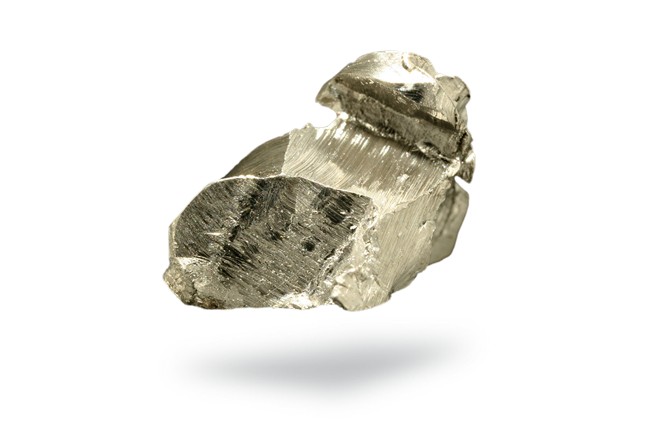
What palladium is bought for
4 short answers
Almost everything goes to the exhaust
The vast majority of palladium demand comes from catalytic converters for petrol engines. That ties the price to car sales and to emission standards.
What the car industry does about electric driving affects this demand. Exactly how, we do not know.
21% VAT is in the price
Palladium is not exempt. The VAT is in what you pay and does not come back out when you sell.
Only investment gold is exempt across the EU.
Two countries, almost all of the supply
Russia and South Africa together supply most of all palladium. Much of it also comes as a by-product of nickel and platinum mines, so production does not simply move with the price.
Concentrated supply is an explanation after the fact, not a forecast.
Hardly anything to compare
21 offers at 6 shops is too few for a real ranking. We show what there is, but the comparison here is weaker than for gold or silver.
We would rather say so out loud than present six prices as a market.
Properties and use
where it comes from and where it goes
| Symbol | Pd · palladium |
|---|---|
| World production | ± 200 tonnes per year |
| Largest producers | Russia, South Africa, Canada, US |
| VAT in the Netherlands | 21% |
| With us | 21 offers · 6 shops |
Where it goes:
The highlighted items are the largest. Exactly what goes to which use differs by year and by source; this is the ranking, not a weighting.
A short history
how it ended up here
Palladium was discovered in 1803 by William Hyde Wollaston, who named it after the asteroid Pallas, discovered shortly before.
It remained a curiosity for a long time. That changed with the catalytic converter: palladium does in petrol engines what platinum does in diesels, and when emission standards tightened demand rose.
For a time the palladium price was above that of gold. Now it is well below. Both facts say nothing about tomorrow.
- 1803Discovered by William Hyde Wollaston and named after the asteroid Pallas.
- 1970sCatalytic converters make palladium indispensable to industry.
- 2018–2022For a number of years the price is above the gold price.
- nowThe price is well below it; petrol cars remain the biggest buyer.
What the price did
in euro, per troy ounce
The price chart goes here. We have been keeping the daily spot price since September 2026. For the years before that we have no source with terms we may use; until there is one this box stays empty rather than filled with figures whose origin we cannot name.
| Term | Average per year |
|---|---|
| 10 years | — |
| 20 years | — |
| 30 years | — |
We never show 1 or 2 years here. Over such a short period you measure the latest wave and not the metal; there have been periods of years in which the price stayed below an earlier peak.
What a purchase costs today
median premium per form
| Form | Editions | Lowest | Median | |
|---|---|---|---|---|
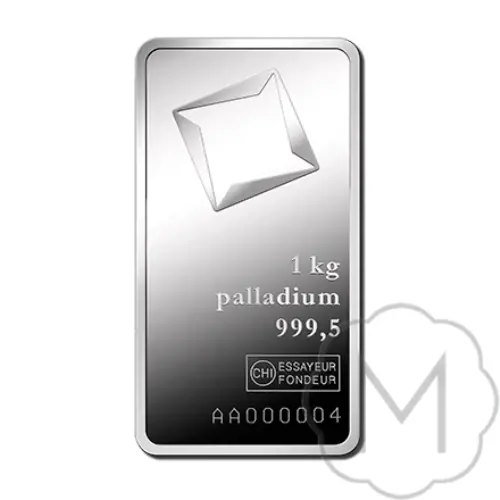
| 1 kg palladium bars | 3 | +27.61% | +33.83% | |
 | 50 g palladium bars | 3 | +29.69% | +34.31% |
| 1 oz palladium bars | 4 | +31.63% | +35.73% |
| 100 g palladium bars | 5 | +29.38% | +36.43% |
All routes to one ounce of palladium →
Important
Past performance predicts nothing. Figures over a long term show what happened, not what will happen. Precious metal pays no interest or dividend, and a euro return moves with the dollar rate.
This is not buying or selling advice. We sell nothing, do not broker and are not a party to your purchase. Whether this suits you we cannot know.
The premium comes on top of the metal price. What a price chart shows is the metal price; what a buyer is left with is that price minus the premium on purchase and minus the dealer's buying margin on sale.
Check price and stock at the shop itself. Our prices are a snapshot; what is on the shop's site is what counts.
The other three
same page, other figures