Gold · spot €3,685.96 per troy ounce
Gold as an investmentwhat you buy, and what it costs
The only one of the four metals that is exempt from VAT across the EU, and the only one where we see offers at every shop. Below: what it is bought for, what the price did, and what a purchase really costs today.
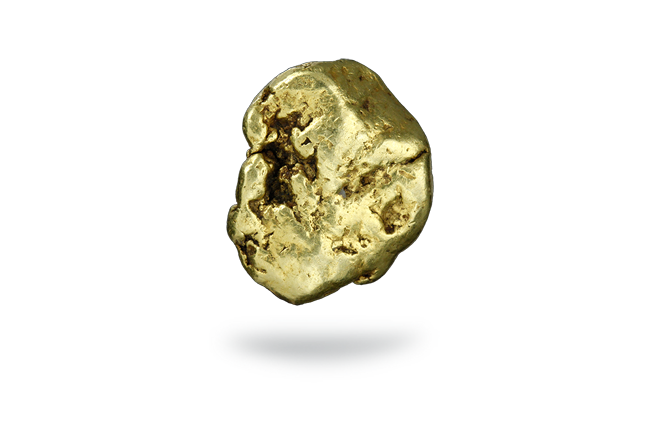
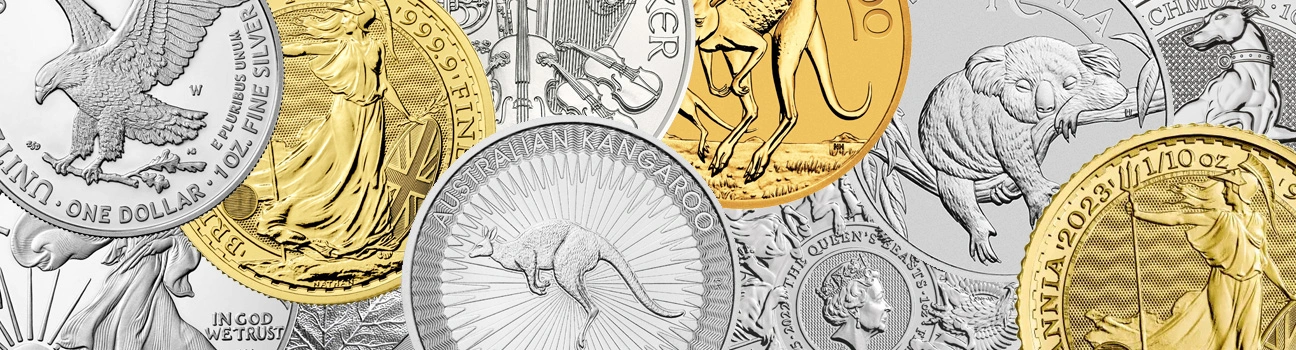
What gold is bought for
4 short answers
Central banks hold it
Gold is nobody else's promise: there is no counterparty attached that can go bankrupt. That is why central banks hold it alongside currency and government bonds.
A reason to buy it is not yet a forecast of the price.
Industry barely plays a part
Unlike silver, platinum and palladium, only a small share of gold demand goes to industry. The price therefore depends less on the economic cycle.
That does not make it safer; it makes the price driven by other things.
You have to keep it somewhere
Physical gold calls for a vault, insurance or both, and that costs money that is not in the price per ounce. Storage with the dealer is possible too, but then you do not have it at home.
We track 11 storage products. Cheaper, but a different purchase, which is why they are not on the board.
No VAT, but a premium
Investment gold is exempt from VAT across the EU. What you pay on top of the metal price is therefore not tax but the premium: minting, packaging, margin and shipping.
With silver there is 21% in the price. That explains most of the difference.
Properties and use
where it comes from and where it goes
| Symbol | Au · aurum |
|---|---|
| World production | ± 3,000 tonnes per year |
| Largest producers | China, Russia, Australia, US, Canada |
| VAT in the Netherlands | exempt (investment gold) |
| With us | 907 offers · 14 shops |
Where it goes:
The highlighted items are the largest. Exactly what goes to which use differs by year and by source; this is the ranking, not a weighting.
A short history
how it ended up here
Gold was one of the first things people used as money: the earliest coins, struck in Lydia in the sixth century BC, were of a gold-silver alloy. What made gold suitable is prosaic: it does not rust, it can be melted and divided, and there is little of it.
For centuries it also backed paper money. The Netherlands held on to that the longest in Europe and only left the gold standard in 1936. After the war the Bretton Woods system tied the dollar to gold and every other currency to the dollar, until the United States cut that link in 1971.
Since then the gold price has floated freely. There is no interest, no dividend and no company making a profit: what you earn or lose is solely the price.
- c. 600 BCThe first coins in Lydia, made of electrum, a natural alloy of gold and silver.
- 1816Great Britain formally adopts the gold standard; the rest of Europe follows in the decades after.
- 1936The Netherlands leaves the gold standard as one of the last countries.
- 1944Bretton Woods: the dollar tied to gold, the rest tied to the dollar.
- 1971The United States cuts that link. Since then the price has floated freely.
What the price did
in euro, per troy ounce
The price chart goes here. We have been keeping the daily spot price since September 2026. For the years before that we have no source with terms we may use; until there is one this box stays empty rather than filled with figures whose origin we cannot name.
| Term | Average per year |
|---|---|
| 10 years | — |
| 20 years | — |
| 30 years | — |
We never show 1 or 2 years here. Over such a short period you measure the latest wave and not the metal; there have been periods of years in which the price stayed below an earlier peak.
What a purchase costs today
median premium per form
| Form | Editions | Lowest | Median | |
|---|---|---|---|---|
| 250 g gold bars | 16 | +0.80% | +1.45% | |
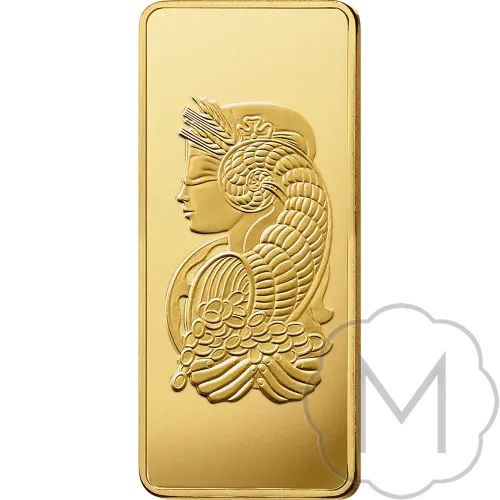 | 1 kg gold bars | 16 | +0.91% | +1.70% |
| 500 g gold bars | 18 | +0.78% | +2.06% | |
| 100 g gold bars | 50 | +0.70% | +2.31% | |
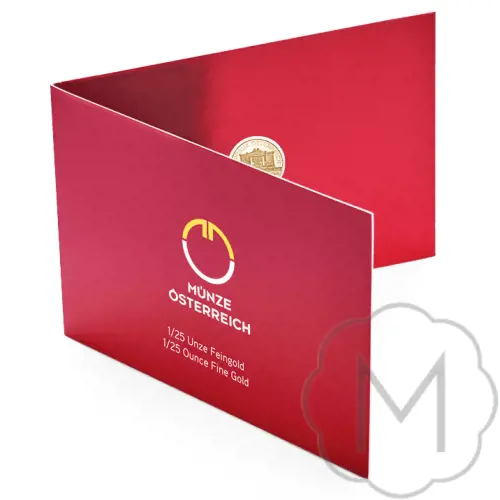 | 1 oz gold coins | 9 | +1.53% | +2.66% |
| 50 g gold bars | 43 | +0.65% | +3.35% | |
| 0.5 g gold bars | 6 | +15.44% | +23.71% |
All routes to one ounce of gold →
Important
Past performance predicts nothing. Figures over a long term show what happened, not what will happen. Precious metal pays no interest or dividend, and a euro return moves with the dollar rate.
This is not buying or selling advice. We sell nothing, do not broker and are not a party to your purchase. Whether this suits you we cannot know.
The premium comes on top of the metal price. What a price chart shows is the metal price; what a buyer is left with is that price minus the premium on purchase and minus the dealer's buying margin on sale.
Check price and stock at the shop itself. Our prices are a snapshot; what is on the shop's site is what counts.
The other three
same page, other figures